Cheques remain an important payment method for many businesses in Qatar, including payments to suppliers, contractors, landlords, employees, and other business partners. When a cheque is not honoured, however, the issue can go beyond a routine banking problem.
The cheque bounce law in Qatar is addressed in part through Article 357 of Qatar's Penal Code, Law No. 11 of 2004. The provision covers several cheque-related acts committed maliciously, including issuing a cheque without sufficient funds and certain actions intended to prevent a cheque from being honoured.
For businesses that issue, receive, or manage cheques, understanding Article 357 can help reduce avoidable problems and encourage better cheque management practices.
This guide explains what Article 357 covers, the penalties stated in the law, what businesses can do to reduce cheque-related problems, and how cheque printing and post-dated cheque management software can help with technical accuracy.
Important: This article provides general information only and is not legal advice. For advice about a specific cheque, dispute, complaint, or legal proceeding in Qatar, consult a licensed Qatari lawyer or refer to the official Qatar Legal Portal.
Quick Answer: Is Bouncing a Cheque a Criminal Offence in Qatar?
Under Article 357 of Qatar's Penal Code (Law No. 11 of 2004), certain cheque-related acts committed maliciously are criminal offences. The provision specifically includes issuing a cheque without sufficient funds to cover its value, withdrawing funds after issuing a cheque so that the remaining balance is insufficient, ordering the recipient not to cash or deposit the cheque, intentionally writing or signing a cheque in a way that prevents payment, and delivering a due cheque while knowing that it is uncovered or cannot be paid.
Article 357 provides for imprisonment of not less than three months and not more than three years and/or a fine of not less than QR 3,000 and not more than QR 10,000.
The law also provides for the court, upon the request of the concerned party, to order the convicted person to pay the value of the cheque and expenses incurred by the beneficiary.
What Is Article 357 of the Qatar Penal Code?
Article 357 is part of Law No. 11 of 2004 Issuing the Penal Code. The official Qatar Legal Portal, Al Meezan, currently lists the law as in force.
The article applies when a person maliciously commits one of the specified acts relating to a cheque.
The five acts identified in Article 357 are:
- Writing a cheque without sufficient funds to cover its face value.
- Withdrawing all or part of the funds after issuing the cheque in a way that leaves insufficient funds to cover the cheque.
- Ordering the recipient of the cheque not to cash or deposit it.
- Intentionally writing or signing the cheque in a way that prevents it from being honoured.
- Delivering a due cheque while knowing that it is uncovered or not exchangeable.
The presence of the word "maliciously" in the provision is important. The legal consequences depend on the facts and circumstances of the individual case, so businesses should not assume that every banking rejection automatically creates the same legal outcome under Article 357.
What Are the Penalties for a Bounced Cheque in Qatar?
Article 357 states that a person who maliciously commits one of the specified acts may face:
- Imprisonment of not less than three months and not more than three years
- A fine of not less than QR 3,000 and not more than QR 10,000
- Either or both of these penalties, as provided by the article
The article also states that, upon the request of the concerned party, the court may order the convicted person to pay the value of the cheque and expenses incurred by the beneficiary.
The execution of that judgment is subject to the procedures referred to in the Code of Commercial and Civil Procedure.
Can the Parties Settle a Cheque Case?
Article 359 of the Penal Code provides a reconciliation mechanism for offences covered by Article 357.
According to the official Qatar Legal Portal, the victim and the attorney may ask the Public Prosecution or the court, depending on the circumstances of the case, to settle the case with the offender. The provision states that reconciliation results in the closure of the case. It also provides for the prosecution to stop execution of the penalty if reconciliation occurs during execution, including after judgment has been issued.
Because the procedure and circumstances of an individual case can vary, anyone involved in a cheque dispute should obtain legal advice before relying on this provision.
Common Reasons a Cheque May Not Be Honoured
A cheque may be returned or rejected for financial, administrative, or technical reasons. Not every banking issue should automatically be treated as a criminal offence under Article 357; the legal provision specifically refers to certain acts committed maliciously.
From a business-management perspective, common problems can include:
Financial Problems
- Insufficient funds available to cover the cheque
- Funds being withdrawn after a cheque has been issued
- An account-related problem affecting payment
Technical or Administrative Problems
- Signature or authorization issues
- Incorrect cheque details
- Differences between the amount written in words and figures
- Incorrect dates or incomplete information
- Unclear handwriting or alterations
- Poor tracking of post-dated cheques
The exact reason for a returned cheque should be confirmed from the bank and, where there may be legal consequences, assessed by an appropriately qualified professional.
How to Reduce Cheque Problems in Your Business
Businesses can take several practical steps to improve cheque management.
1. Confirm Funds Before Issuing a Cheque
Maintain appropriate cash-flow controls and confirm that sufficient funds are available before issuing a cheque.
Financial discipline is particularly important because Article 357 specifically addresses issuing a cheque without sufficient funds and certain actions that leave insufficient funds after the cheque has been issued.
2. Reduce Manual Writing Errors
Handwriting cheque information can create avoidable problems such as unclear amounts, inconsistent information, or corrections.
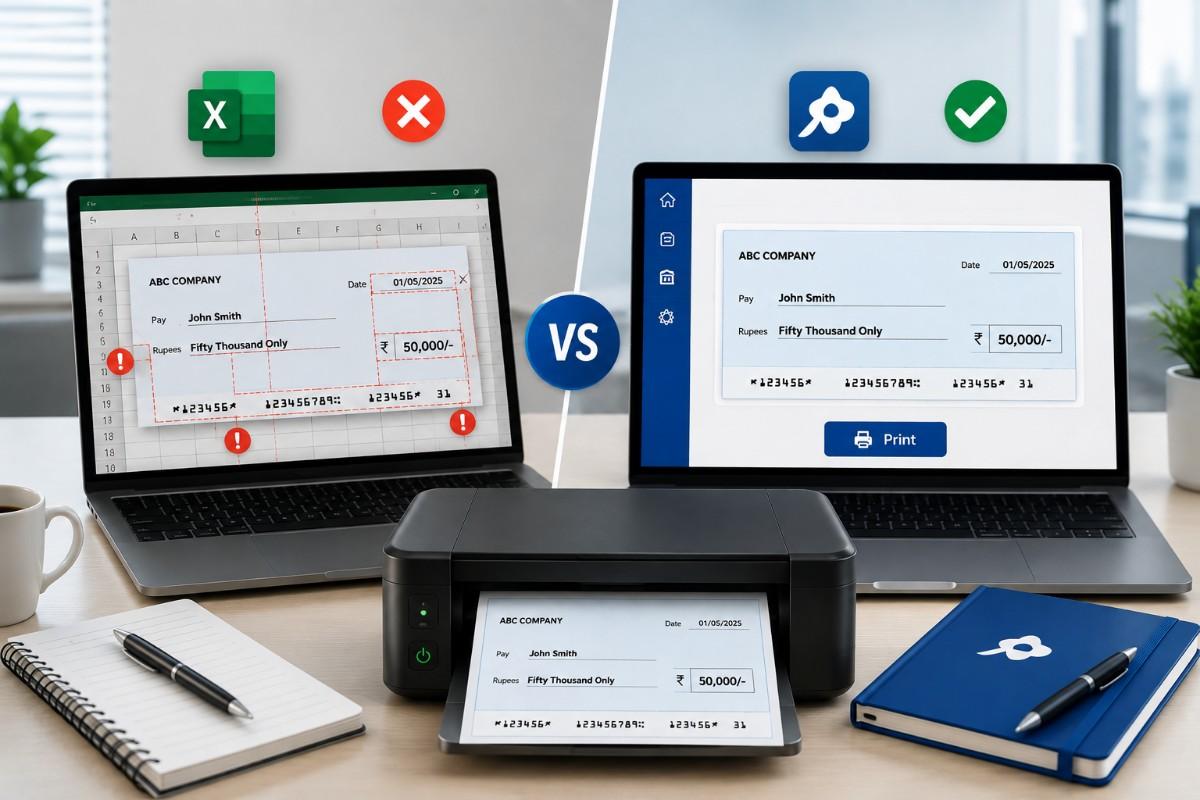
Using cheque-printing software can help businesses enter information consistently and produce cleaner printed cheques.
3. Check Amounts Carefully
The amount in figures and the amount in words should correspond.
Automated conversion from figures to words can reduce the possibility of manually entering two different amounts.
4. Track Post-Dated Cheques
Businesses that use post-dated cheques should maintain a clear record of:
- Cheque number
- Amount
- Payee
- Issue date
- Due date
- Status
- Related transaction or supplier
A proper tracking system can help businesses know which cheques are approaching their due dates and which have already been processed.
5. Keep Proper Records
Maintain records of issued cheques, cheque numbers, payment details, and relevant documentation.
Good records can make it easier to identify outstanding payments and investigate a problem if a cheque is returned.
How Cheqaat Helps Reduce Technical Cheque Problems
Cheqaat is cheque-printing and post-dated cheque management software designed to help businesses manage cheque preparation and related records.
It does not replace cash-flow management and cannot prevent a cheque from being dishonoured because there are insufficient funds. However, software can help reduce certain avoidable problems associated with manual cheque preparation.
Cheqaat can help with:
- Cheque alignment: Prepare cheque layouts consistently for supported bank formats.
- Amount-to-words conversion: Convert the numerical amount into words to reduce manual entry errors.
- Professional printing: Produce clean, printed cheque information instead of relying entirely on handwriting.
- PDC management: Track post-dated cheque information and due dates.
- Print history: Maintain a record of cheque-printing activity.
The goal is simple: reduce preventable technical and administrative errors while giving businesses a more organized way to manage their cheques.
Download Cheqaat free · See pricing
What Should You Do If You Receive a Bounced Cheque in Qatar?
If your business receives a cheque that is not honoured, start by confirming the reason for the return with the relevant bank.
You should generally keep all relevant records, including:
- The original cheque or available cheque documentation.
- The bank's return information or documentation.
- Correspondence with the issuer.
- Invoices, contracts, or other documents connected to the payment.
- Records of any subsequent payment or settlement discussions.
If the matter may involve an offence under Article 357, obtain legal advice regarding the appropriate procedure.
Article 357 provides for the court, upon the request of the concerned party, to order payment of the cheque value and expenses incurred by the beneficiary. Article 359 also provides a reconciliation mechanism for offences covered by Article 357.
The appropriate legal process depends on the facts of the case, so businesses should not rely on a generic online checklist instead of professional legal advice.
Frequently Asked Questions
Is bouncing a cheque a crime in Qatar?
Certain cheque-related acts are criminal offences under Article 357 of Qatar's Penal Code when committed maliciously. These include issuing a cheque without sufficient funds and other specified acts intended to prevent the cheque from being honoured. Article 357 provides for imprisonment of three months to three years and/or a fine of QR 3,000 to QR 10,000.
What is Article 357 in Qatar?
Article 357 is a provision of Law No. 11 of 2004 Issuing the Penal Code. It addresses specified cheque-related acts committed maliciously, including issuing a cheque without sufficient funds, withdrawing funds after issuing a cheque so that the remaining balance is insufficient, and other acts listed in the article.
What is the penalty for a bounced cheque in Qatar?
For the acts covered by Article 357, the law provides for imprisonment of not less than three months and not more than three years and/or a fine of not less than QR 3,000 and not more than QR 10,000. The court may also, upon the request of the concerned party, order payment of the cheque value and beneficiary expenses.
Can the parties settle a cheque case in Qatar?
Article 359 provides that, for offences covered by Article 357, the victim and attorney may request reconciliation with the offender from the Public Prosecution or the court, depending on the case. The article states that reconciliation results in closure of the case and also addresses the effect of reconciliation on execution of a penalty.
How can I avoid cheque problems in my business?
Businesses should maintain sufficient funds, carefully prepare cheque information, verify amounts and dates, track post-dated cheques, and maintain proper records.
Cheque-printing software can also reduce certain manual and technical errors, although software cannot solve a lack of funds.
Can cheque-printing software prevent a bounced cheque?
No. Cheque-printing software cannot prevent a cheque from being dishonoured because of insufficient funds.
It can, however, help reduce certain technical and administrative problems by improving cheque preparation, amount-to-words accuracy, printing consistency, record keeping, and post-dated cheque tracking.
Conclusion
The cheque bounce law in Qatar carries important consequences for businesses and individuals who issue cheques.
Article 357 of Qatar's Penal Code specifically addresses several malicious cheque-related acts, including issuing a cheque without sufficient funds. The provision currently listed on the official Qatar Legal Portal provides for imprisonment and/or a fine, and it also allows the court, upon request, to order payment of the cheque value and certain beneficiary expenses. Article 359 provides a reconciliation mechanism for offences covered by Article 357.
For businesses, prevention starts with two areas: financial control and accurate cheque management.
Make sure funds are available before issuing cheques, maintain accurate records, track post-dated cheques carefully, and reduce avoidable manual errors when preparing cheques.
Cheqaat can help with the technical side of cheque preparation and PDC management, while businesses remain responsible for maintaining sufficient funds and complying with applicable laws.
Download Cheqaat free and simplify cheque preparation and post-dated cheque management for your business.
Legal Disclaimer
This article is for general informational purposes only and does not constitute legal advice. Qatar's laws, regulations, procedures, and their interpretation may change, and the outcome of an individual case depends on its specific facts. If you are involved in a bounced-cheque dispute or potential legal proceeding in Qatar, consult a licensed lawyer in Qatar or refer to official government legal sources.